Brake Service at Your Location

Squealing, grinding, vibrating, or taking longer to stop?

Brake symptoms can point to worn pads, rotor problems, or another braking-system concern, but the sound or feel alone does not always identify which part needs replacement.

Brake service can help inspect the condition of the pads, rotors, and related accessible components before recommending a repair.

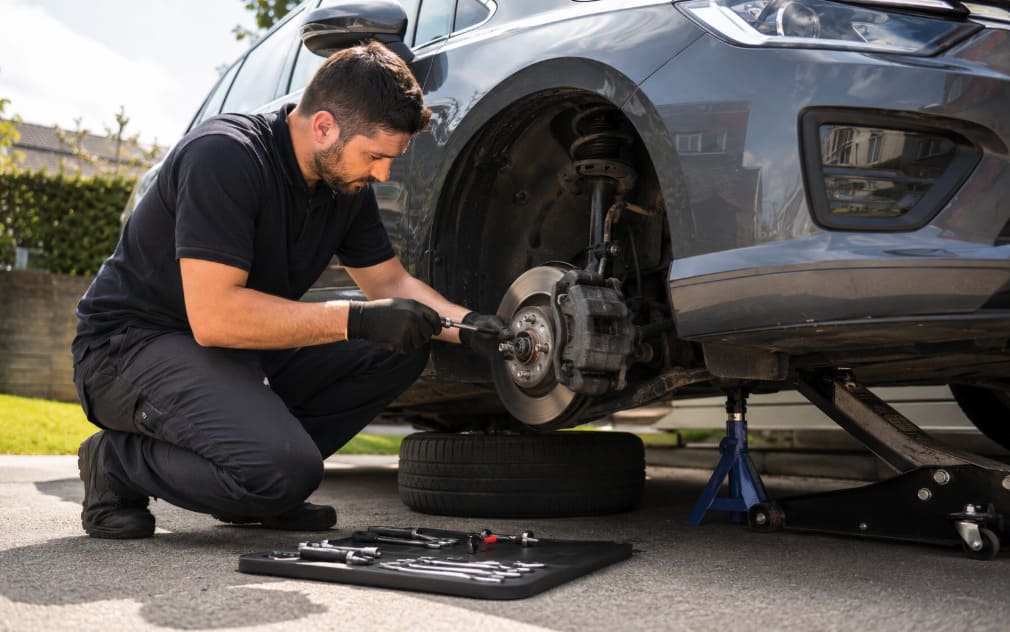
Mobile mechanic inspecting brake pads and rotor on a vehicle at the customer’s location

When Should the Brakes Be Checked?

Changes in braking noise, feel, or stopping performance should be evaluated rather than ignored.

Squealing or Squeaking When Braking

Squealing can occur when brake pads are worn or when another condition affects how the pads and rotors make contact. Inspection helps determine the condition of the pads, rotors, and related braking components.

For a closer comparison of common brake noises, see squeaking vs grinding brakes.

Grinding When Braking

Grinding or harsh metal-on-metal sounds may indicate that braking components need prompt attention. If friction material is severely worn, continued driving may cause additional damage.

Vibration While Braking

A vibration or pulsing sensation while braking may be related to rotor condition or another braking-system issue. Pads and rotors should be evaluated together before recommending a repair.

Longer Stopping Distance

If the vehicle seems to take longer to stop or requires more effort than usual, the braking system should be checked before a specific repair is recommended.

Brake Pads Are Already Known to Be Worn

If a previous inspection has confirmed worn brake pads, replacement may be needed. Rotor condition should still be considered before new pads are installed.

For more detail on replacement timing, see how often brake pads should be replaced.

Rotors Are Already Known to Be Worn or Damaged

If rotor wear or damage has already been identified, replacement may be needed. Pad condition should be considered at the same time.

What May Be Checked During a Brake Inspection?

The exact inspection depends on the vehicle and reported symptoms. The goal is to identify the condition causing the symptom before replacing parts unnecessarily.

  • Brake pad condition
  • Brake rotor condition
  • Visible wear or damage
  • Differences in wear between components
  • Brake-related noises
  • Vibration during braking
  • Reported stopping symptoms
  • Accessible related brake components
  • Whether pad replacement is needed
  • Whether rotor replacement is needed

Why Inspect the Brakes Before Replacing Parts?

Squealing does not always mean new pads are needed, and vibration does not automatically mean the rotors are bad. Noise and pedal feel can be influenced by several braking-system conditions.

Brake pads and rotors work as a pair. If one component is worn or damaged, the condition of the other can affect braking feel, noise, and repair quality.

When brake pad replacement is needed, rotor condition should also be checked. When rotor replacement is needed, the condition of the related pads should be considered at the same time.

For a component-by-component comparison, see brake pads vs rotors.

How Brake Service Works

The service begins with the symptoms and inspection findings before determining which brake repair is needed.

Step 1

Describe the Brake Symptoms

Provide the vehicle year, make, model, service location, and what happens when braking, including squealing, grinding, vibration, pulsing, longer stopping distance, pedal changes, and whether the concern appears front or rear.

Step 2

Inspect the Braking Components

Pads, rotors, visible wear, and other accessible related components are reviewed based on the reported symptoms.

Step 3

Determine the Next Service

The findings help determine whether the next step is brake pad replacement, rotor replacement, pad and rotor service together, additional brake inspection, another repair, or service requiring additional equipment.

Brake Service FAQs

What does brake service include?

Brake service may include inspection of the brake pads, rotors, visible wear, braking symptoms, and related accessible components, along with brake pad or rotor replacement when needed.

Can brake pads be replaced at the vehicle’s location?

Brake pad replacement can often be completed where the vehicle is parked when the braking components can be accessed and serviced there.

Can brake rotors be replaced with the pads?

Yes. Brake rotors can be replaced with the pads when inspection shows that rotor replacement is needed and the components can be serviced at the vehicle location.

Do squealing brakes always mean new pads are needed?

No. Squealing can occur for several reasons. Brake pad and rotor condition should be inspected before recommending replacement.

Can brake vibration be caused by the rotors?

Yes, rotor condition may contribute to vibration, but the symptom alone does not confirm that rotor replacement is needed.

Can every brake repair be completed on-site?

No. Some brake concerns require specialized equipment, additional diagnosis, extensive repair work, or shop-level resources.

Brake Service Resources

Use these pages to review the broader service catalog, local service coverage, and common questions before booking brake service.

Service Areas

Review the current Mobile Mechanic Pro service-area directory and supported Hampton Roads city pages.

Mobile Mechanic Near Me

See how mobile mechanic service works at homes, workplaces, apartments, parking areas, and other vehicle locations.

Mobile Mechanic FAQs

Find answers about diagnostics, appointments, vehicle locations, and common on-site repair questions.

Gallery

See examples of mobile mechanic service work and vehicle repair activity.

Contact

Use the contact page for general questions that are not part of a vehicle service booking.

Book Brake Service

Brakes squealing, grinding, vibrating, or just not feeling right? Provide the vehicle details, service location, whether the concern appears front or rear, whether pads or rotors have already been inspected, and a clear description of what happens when braking.