Control Arm Replacement at Your Location

Clunking over bumps, steering feeling loose, or already told a control arm is worn?

A control arm connects the wheel assembly to the vehicle’s suspension structure and helps control wheel movement as the suspension travels.

Control arm replacement may be needed when inspection or previous diagnosis identifies the control arm assembly as the problem.

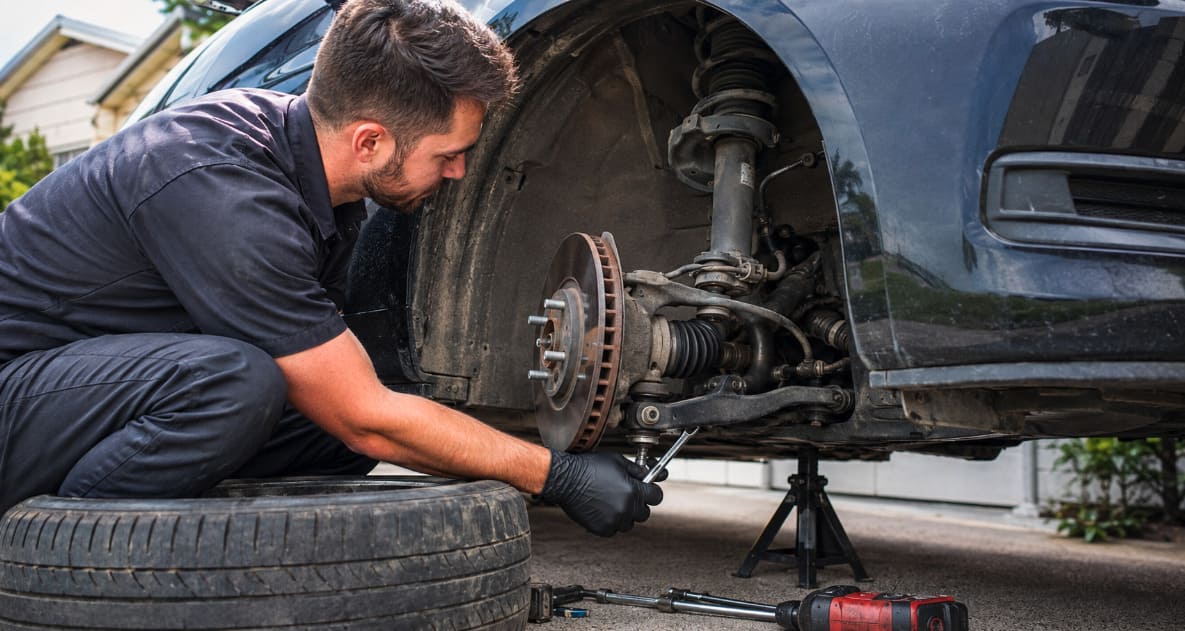
Mobile mechanic replacing a front control arm and inspecting suspension components at a customer’s location

When Should a Control Arm Be Checked?

Control-arm problems can overlap with several other suspension and steering concerns. The exact symptoms help determine where inspection should begin.

Clunking or Knocking Over Bumps

A worn control-arm bushing or related component may create a clunk when the suspension moves over bumps or rough pavement. Sway-bar links, ball joints, strut mounts, shocks, struts, tie rods, and other hardware can create similar noises.

Steering Feels Loose or Unstable

A worn suspension joint or bushing can sometimes contribute to loose or unsettled steering. Tie rods, wheel bearings, other suspension parts, and steering-system conditions can produce similar symptoms.

Vehicle Pulls or Feels Different Under Braking

Movement in a worn suspension component can sometimes affect how the vehicle feels when braking or accelerating. The symptom alone does not identify the control arm as the failed component.

Uneven Tire Wear

Worn suspension or steering components may contribute to abnormal tire wear. Control arms, bushings, ball joints, tie rods, alignment, tire condition, and other suspension components may all need consideration.

Visible Damage or Deteriorated Bushings

If inspection shows that the control arm is bent, damaged, or has severely deteriorated integrated bushings, replacement of the complete assembly may be needed based on the vehicle design.

Control Arm Has Already Been Diagnosed

If previous inspection has already confirmed a worn or damaged control arm assembly, replacement is the next step after confirming side, position, part configuration, access, and work requirements.

What May Be Checked Before Control Arm Replacement?

The exact inspection depends on the vehicle and reported symptoms. The goal is to determine whether the complete control-arm assembly is actually responsible before replacement is selected.

  • Control-arm condition
  • Visible damage
  • Integrated control-arm bushings
  • Related ball-joint area when applicable
  • Abnormal movement or looseness
  • Mounting points
  • Suspension hardware
  • Tire-wear patterns related to the concern
  • Related steering and suspension components
  • Wheel-bearing or hub concerns when symptoms overlap

Why Diagnose Before Replacing the Control Arm?

Clunking, looseness, and uneven tire wear describe symptoms, not the failed part. A tie rod, strut, wheel bearing, sway-bar link, ball joint, or another suspension component can create similar symptoms.

This service focuses on complete control-arm assembly replacement rather than separately pressing individual bushings in and out. On some vehicles, the ball joint is integrated into the assembly; on others, it is a separate component.

If the failed component has not yet been identified, see Suspension Inspection and Repair Service. If the problem has been confirmed as a shock or strut concern, see Shock and Strut Replacement. If the source remains unclear, see Car Diagnostic Service.
How Control Arm Replacement Service Works

The service follows the exact suspension, steering, and wear symptoms before replacement is selected.

Step 1

Describe the Suspension Symptoms

Provide the vehicle year, make, model, service location, and whether the vehicle clunks over bumps, feels loose or unstable, shows uneven tire wear, pulls or shifts under braking, or has already had a control arm diagnosed.

Step 2

Review the Control Arm and Related Components

The control arm, integrated bushings, related joint area, mounting points, and other accessible suspension or steering components may be reviewed based on the symptoms and inspection findings.

Step 3

Determine the Next Repair

If the complete control-arm assembly is confirmed as the problem, replacement is the next step. If another component is responsible, the request can be directed toward the related service.

Control Arm Replacement FAQs

What are common signs of a bad control arm?

Possible signs include clunking over bumps, loose or unstable handling, unusual suspension movement, or uneven tire wear. Other suspension and steering components can create similar symptoms.

Does clunking mean the control arm needs replacement?

No. Clunking may involve bushings, links, ball joints, strut mounts, tie rods, shocks, struts, or other suspension components.

Are control-arm bushings replaced separately?

This service focuses on complete control-arm assembly replacement. On many vehicles, the bushings are included with the replacement assembly.

Is the ball joint included with a control arm?

Sometimes. Certain control arms include an integrated ball joint, while others use a separate ball joint. The exact design depends on the vehicle.

Can a control arm be replaced at the vehicle's location?

Control arm replacement can often be completed where the vehicle is parked when the assembly can be accessed and serviced there.

Can every control-arm replacement be completed on-site?

No. Some vehicles require difficult access, significant suspension disassembly, specialized tools, seized-hardware work, alignment-related procedures, or shop-level resources.

Control Arm Service Resources

Use these pages to review the broader service catalog, local service coverage, and common questions before booking control arm service.

Service Areas

Review the current Mobile Mechanic Pro service-area directory and supported Hampton Roads city pages.

Mobile Mechanic Near Me

See how mobile mechanic service works at homes, workplaces, apartments, parking areas, and other vehicle locations.

Mobile Mechanic FAQs

Find answers about diagnostics, appointments, vehicle locations, and common on-site repair questions.

Gallery

See examples of mobile mechanic service work and vehicle repair activity.

Contact

Use the contact page for general questions that are not part of a vehicle service request.

Book Control Arm Service

Clunking over bumps, steering feeling loose, or already diagnosed with a worn control arm? Provide the vehicle details, service location, whether the problem appears front or rear and left or right, whether the vehicle pulls or feels unstable, and whether a complete replacement control arm has already been purchased.