Shock and Strut Replacement at Your Location

Vehicle bouncing after every bump, dipping when braking, or feeling less controlled than it used to?

Those symptoms can point to worn shocks or struts, but they do not automatically confirm which suspension component needs replacement.

Shock and strut replacement may be needed when inspection shows that these components are worn, leaking, damaged, or no longer controlling vehicle movement properly.

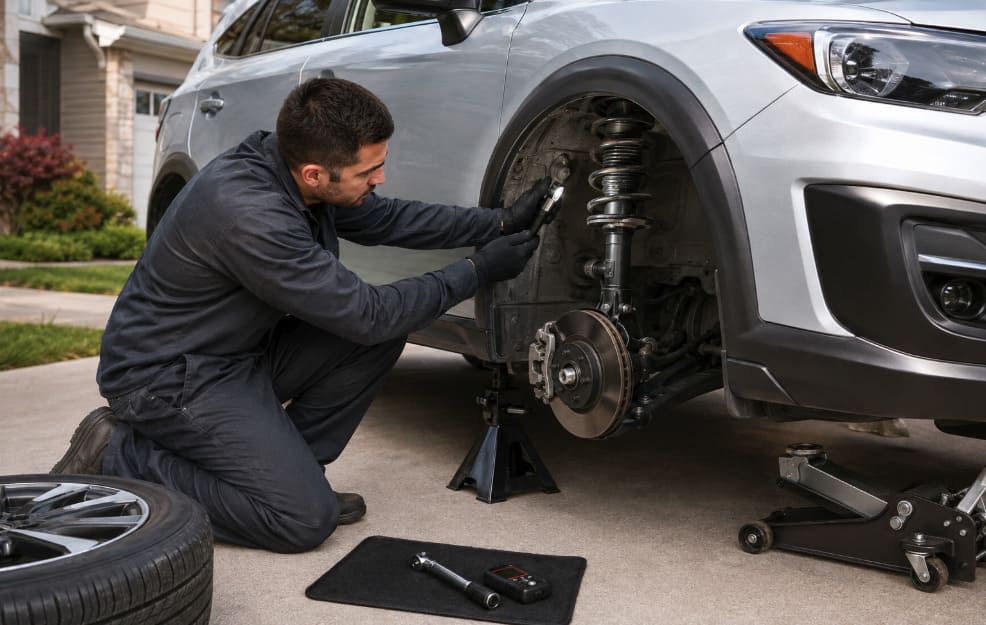
Mobile mechanic replacing a worn front strut on a safely supported vehicle at the customer’s location

When Should Shocks or Struts Be Checked?

Shocks and struts help control suspension movement as the vehicle travels over bumps, dips, and uneven pavement.

Vehicle Keeps Bouncing After a Bump

If the vehicle continues moving up and down after passing over a bump, the shocks or struts may not be controlling suspension movement as effectively as expected. Other suspension conditions can affect ride quality too.

Front of the Vehicle Dips During Braking

Noticeable forward movement when braking may be associated with suspension wear. Shocks or struts are one possible area to inspect, but the symptom should be considered with the overall suspension condition.

Vehicle Feels Loose or Less Controlled

A vehicle that feels floaty, unsettled, or less stable over uneven pavement may have worn suspension components. Bushings, springs, links, tires, and other components can create similar symptoms.

Shock or Strut Is Leaking

Visible fluid on the body of a shock or strut may indicate that the component needs further inspection before replacement is selected.

Uneven or Unusual Tire Wear

Worn suspension components may contribute to abnormal tire wear, but tire pressure, alignment, tire condition, steering components, and other suspension problems may also affect wear patterns.

Shock or Strut Has Already Been Diagnosed

If previous inspection has already identified a worn or damaged shock or strut, replacement is the next step after confirming vehicle design, part fitment, access, and work requirements.

What May Be Checked During a Shock and Strut Inspection?

The exact inspection depends on the vehicle and reported symptoms. The goal is to determine whether shocks or struts are actually responsible before parts are replaced.

  • Shock condition
  • Strut condition
  • Visible fluid leakage
  • Visible dents or damage
  • Mounts
  • Accessible bushings
  • Suspension movement and excessive bouncing
  • Springs and related accessible components
  • Differences between sides of the vehicle
  • Tire-wear patterns and other related suspension components

Why Inspect Before Replacing Shocks or Struts?

Bouncing, clunking, and poor ride control describe symptoms, not the failed part. A worn mount may create noise. A bushing problem may cause looseness. A spring issue can affect ride height. A tie rod or steering component can change how the vehicle feels.

A confirmed leak or clear wear may support replacement, but the overall suspension condition should still be reviewed so the repair follows the actual findings.

If the failed component has not yet been identified, see Suspension Inspection and Repair Service.
How Shock and Strut Service Works

The service follows the reported ride, handling, noise, and inspection findings before replacement is selected.

Step 1

Describe the Suspension Symptoms

Provide the vehicle year, make, model, service location, and whether the vehicle bounces excessively, dips during braking, feels unstable, clunks over bumps, shows visible fluid on a shock or strut, or has already been diagnosed.

Step 2

Review the Shock, Strut, and Related Components

Shock or strut condition, visible leaks, mounts, bushings, suspension movement, and other accessible related components may be reviewed based on the symptoms and inspection findings.

Step 3

Determine the Next Repair

If a shock or strut is confirmed worn or damaged, replacement is the next step. If another component is responsible, the findings help direct the request toward the related service.

Shock and Strut Replacement FAQs

What are common signs of worn shocks or struts?

Possible signs include excessive bouncing, reduced ride control, noticeable dipping, visible fluid leakage, or other changes in how the vehicle handles bumps. Other suspension problems can create similar symptoms, so inspection may be needed.

Does a bouncy ride mean the shocks or struts need replacement?

Not always. Excessive bouncing can point toward shock or strut wear, but springs, mounts, bushings, tires, and other suspension components may also affect ride quality.

Do clunking noises mean the struts are bad?

No. Clunking may involve strut mounts, bushings, links, joints, tie rods, or other suspension components. The source should be identified before replacement is selected.

Can leaking shocks or struts be replaced at the vehicle's location?

Shock and strut replacement can often be completed where the vehicle is parked when the components can be accessed and serviced there.

Should shocks or struts be inspected before replacement?

Yes, when failure has not already been confirmed. Inspection helps determine whether the symptom actually involves the shock or strut or another suspension component.

Can every shock or strut be replaced on-site?

No. Some vehicles require difficult access, specialized tools, significant suspension disassembly, alignment-related procedures, or shop-level equipment.

Shock and Strut Service Resources

Use these pages to review the broader service catalog, local service coverage, and common questions before booking shock or strut service.

Service Areas

Review the current Mobile Mechanic Pro service-area directory and supported Hampton Roads city pages.

Mobile Mechanic Near Me

See how mobile mechanic service works at homes, workplaces, apartments, parking areas, and other vehicle locations.

Mobile Mechanic FAQs

Find answers about diagnostics, appointments, vehicle locations, and common on-site repair questions.

Gallery

See examples of mobile mechanic service work and vehicle repair activity.

Contact

Use the contact page for general questions that are not part of a vehicle service request.

Book Shock and Strut Service

Bouncing after bumps, dipping during braking, or already diagnosed with worn shocks or struts? Provide the vehicle details, service location, whether the concern appears front or rear, whether fluid is visible, whether the vehicle clunks or feels unstable, and whether replacement parts have already been purchased.