
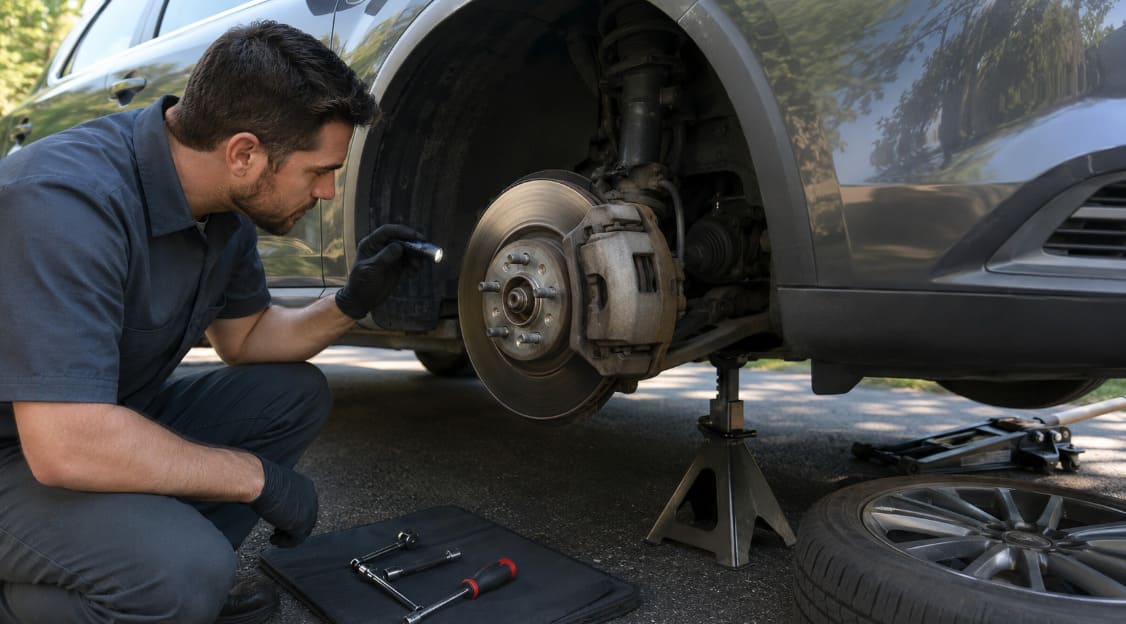
Brake pads vs rotors describes two different parts of a disc braking system that work together every time the vehicle slows down. Brake pads provide friction material that presses against the rotors, while the rotors provide the rotating surfaces the pads contact.
Because the two components work as a pair, wear or damage to one can affect how the other performs. That does not mean brake pads and rotors always need replacement at the same time.
This guide explains brake pads vs rotors, six important differences between them, common wear clues, and why both components should be inspected before deciding what actually needs replacement.
Brake Pads vs Rotors: 6 Critical Differences That Matter
When comparing brake pads vs rotors, the biggest differences involve what each component does, how it wears, and how its condition is evaluated.
- Brake pads are friction material, while rotors are rotating metal discs.
- Pads press against rotors to create braking friction.
- Pads and rotors can wear at different rates.
- Brake noise can involve either component or both.
- Pad replacement does not automatically require rotor replacement.
- Both should be inspected before a complete brake repair is determined.
Those differences are important because a symptom such as squeaking, grinding, vibration, or visible wear does not automatically identify which component needs attention.
What Are Brake Pads?
Brake pads are replaceable friction components located within the brake caliper assembly.
When the brake pedal is applied, the caliper helps press the brake pads against the rotor. The resulting friction helps slow the rotating wheel.
Brake pads contain friction material designed to wear gradually during normal braking. The remaining material, wear pattern, and applicable vehicle specifications help determine whether replacement is needed.
This is one of the fundamental differences in brake pads vs rotors: the pads are designed as friction components that gradually lose material through use.
What Are Brake Rotors?
Brake rotors are metal discs that rotate with the wheels. During braking, the brake pads contact the rotor surfaces to create friction.
Rotors also experience wear, heat, and repeated contact. Their condition can be affected by thickness, surface wear, scoring, corrosion, cracks, heat-related damage, or other vehicle-specific factors.
Unlike a brake pad, a rotor is not simply a block of friction material. Its surface and dimensions must remain appropriate for the braking system to operate as designed.
How Do Brake Pads and Rotors Work Together?
Brake pads and rotors form a friction pair.
When braking force is applied, the pads contact both sides of the rotor. Friction converts the vehicle’s motion into heat, helping reduce wheel speed.
This relationship explains why a brake pads vs rotors inspection should not evaluate one component in isolation. Pad condition can influence rotor surfaces, while rotor condition can affect how new or existing pads contact the disc.
AAA’s general maintenance guidance recommends that brake-system inspections include both pads and rotors. AAA’s vehicle maintenance checklist provides additional brake-maintenance guidance.
Do Brake Pads Wear Out Faster Than Rotors?
Brake pads often wear differently from rotors because they are designed as friction material, but there is no universal rule stating exactly how long either component will last.
Wear can depend on:
- Vehicle design
- Driving conditions
- Braking habits
- Brake-pad material
- Vehicle weight and load
- Rotor condition
- Caliper and hardware operation
- Previous brake repairs
The answer to brake pads vs rotors wear is therefore condition-based rather than a fixed mileage comparison.
For more detail on brake-pad timing, see how often brake pads should be replaced.
Do Brake Pads and Rotors Always Need Replacement Together?
No. Brake pads and rotors should be inspected together, but they do not automatically need replacement at the same time.
If brake pads are worn but the rotors remain within the applicable specifications and are otherwise serviceable, the repair decision may differ from a situation involving worn, damaged, or out-of-specification rotors.
Likewise, rotor condition cannot be determined simply by knowing that the brake pads need replacement.
That is one of the most important distinctions in brake pads vs rotors: the components work together, but each still requires its own condition assessment.
What Determines Whether Brake Pads Need Replacement?
Brake-pad replacement should be based on actual condition and applicable vehicle specifications rather than mileage or sound alone.
An inspection may consider:
- Remaining friction-material thickness
- Inner and outer pad wear
- Uneven wear
- Visible cracking or damage
- Wear-indicator condition
- Rotor condition
- Caliper or related component concerns
A squeak or warning sound may provide a reason to inspect the brakes, but it does not by itself establish that the pads are beyond specification.
What Determines Whether Brake Rotors Need Replacement?
Rotor replacement depends on the rotor’s actual condition and the specifications that apply to that vehicle.
Inspection can consider factors such as:
- Rotor thickness
- Surface condition
- Scoring or other wear
- Cracking or visible damage
- Heat-related damage
- Runout or other measurements when applicable
- Manufacturer service limits
A rotor should not be assumed to need replacement merely because brake pads are worn.
Likewise, a rotor that looks relatively smooth from one viewing angle should not automatically be considered serviceable without considering the applicable inspection requirements.
Can Worn Brake Pads Damage Rotors?
Severely worn brake pads can contribute to rotor damage if friction material becomes depleted enough to allow unwanted metal contact.
That possibility is one reason grinding brake noise deserves prompt attention.
However, a grinding sound should still be inspected rather than treated as proof that both pads and rotors have failed. Other mechanical conditions can also create scraping or grinding sounds.
For a detailed sound comparison, see squeaking vs grinding brakes.
Can Bad Rotors Damage Brake Pads?
Rotor condition can affect how brake pads contact the braking surface and how they wear.
A rotor with significant surface irregularities, damage, or another condition outside applicable specifications can contribute to abnormal pad contact or wear.
This is why the brake pads vs rotors decision should consider both sides of the friction pair rather than treating the pads as the only wear component.
Can Brake Pads Cause Squeaking?
Yes. Brake-pad condition, pad material, wear indicators, vibration, and interaction with the rotor can contribute to squeaking or squealing.
However, squeaking does not prove that the pads need replacement.
Moisture, rotor surface conditions, hardware, component vibration, and other factors can also affect brake noise.
Can Brake Rotors Cause Grinding or Squeaking?
Rotor condition can contribute to both squeaking and grinding noises.
Corrosion, scoring, surface irregularities, damage, or interaction with the brake pads can change the sound produced during braking.
When evaluating brake pads vs rotors from noise alone, it is important not to assume the sound identifies one component. Inspection provides more useful information than the sound by itself.
What About Brake Vibration or Pulsing?
Brake vibration or pulsing can be related to rotor condition, but the symptom does not establish one cause without inspection.
Depending on the vehicle and circumstances, braking vibration can involve rotor condition, wheel or suspension concerns, brake components, or other mechanical factors.
The timing of the vibration can provide useful information. For example, noting whether it appears only during braking, changes with vehicle speed, or occurs through the brake pedal or steering wheel can help guide an inspection.
Can Uneven Brake Pad Wear Point to Another Problem?
Yes. Significant differences in pad wear can suggest that more than normal friction-material wear needs to be considered.
Possible factors can include caliper operation, brake hardware, component movement, or other conditions affecting how braking force is applied.
Replacing pads without identifying the reason for abnormal wear may leave the underlying condition unresolved.
For component-specific information, see the brake caliper service guide.
Which Is More Expensive: Brake Pads vs Rotors?
There is no single cost comparison that applies to every vehicle.
Parts, vehicle design, access, rotor size, brake configuration, and the actual repair required can all affect cost. Some vehicles also use braking components that differ significantly from more common passenger-car designs.
This article does not provide a universal price estimate because the brake pads vs rotors decision should first establish what actually needs repair.
Can You Replace Brake Pads Without Replacing Rotors?
Sometimes. If the rotors remain within applicable specifications and their condition supports continued service, pad replacement does not automatically require rotor replacement.
The rotor still needs to be evaluated because new pads will contact its existing surfaces.
The appropriate repair can depend on rotor thickness, condition, vehicle procedures, and other brake-system findings.
Can You Replace Rotors Without Replacing Brake Pads?
The appropriate repair depends on the condition of both components and the procedures that apply to the vehicle.
If rotor replacement is required, brake-pad condition should be evaluated at the same time. Existing pad wear, surface condition, thickness, and interaction with the new rotor can affect the repair decision.
There is no useful universal rule that says one component should always be replaced merely because the other one is being serviced.
What Should a Brake Pads vs Rotors Inspection Include?
A brake pads vs rotors inspection should consider the condition of both friction components along with related parts that can affect their operation.
Depending on the vehicle and access, that may include:
- Brake-pad thickness
- Pad wear pattern
- Rotor thickness and surface condition
- Visible scoring, cracking, or damage
- Caliper condition and movement
- Brake hardware
- Differences between wheels or axles
- Applicable manufacturer specifications
The goal is to identify what the braking system actually needs rather than automatically replacing parts as a set.
Should Brake Pads or Rotors Be Replaced Based on Symptoms Alone?
No. Symptoms can indicate that inspection is needed, but they should not automatically determine which component gets replaced.
Squeaking, grinding, vibration, pulsing, or changes in braking feel can involve several brake-system conditions.
Testing and inspection should confirm the repair before parts are replaced when the cause has not already been established.
For information about brake inspection and repair options, review the brake service guide.
When Do Brake Pads vs Rotors Need Prompt Inspection?
Brake pads vs rotors should be inspected promptly when brake noise or wear symptoms are persistent, worsening, or accompanied by changes in braking performance.
Reasons to seek inspection can include:
- Persistent grinding or harsh scraping
- New or worsening brake vibration
- Noticeably changed brake-pedal feel
- Reduced braking response
- Vehicle pulling during braking
- A brake-related warning light
- A burning odor or unusual heat near a wheel
- Visible brake-component damage
If the vehicle does not feel safe to stop normally, braking performance has noticeably deteriorated, or there is an obvious brake-system safety concern, continued driving may not be appropriate until the condition is evaluated.
Frequently Asked Questions About Brake Pads vs Rotors
What is the main difference between brake pads and rotors?
Brake pads are friction components that press against the rotors. Rotors are metal discs that rotate with the wheels and provide the surfaces the pads contact during braking.
Do brake pads and rotors always need replacement together?
No. They should be inspected together, but each component should be evaluated according to its own condition and applicable vehicle specifications.
Can worn brake pads ruin rotors?
Severely depleted friction material can contribute to unwanted metal contact and rotor damage. Inspection is still needed to determine the condition of both components.
How can you tell whether brake pads or rotors are causing noise?
Noise alone generally cannot confirm which component is responsible. Pad thickness, rotor condition, wear patterns, hardware, caliper operation, and other brake-system findings may need inspection.
Can rotors be good when brake pads are worn?
Yes. Worn brake pads do not automatically mean the rotors require replacement. Rotor condition and applicable specifications should be evaluated separately.
Which wears out first, brake pads or rotors?
There is no universal replacement order for every vehicle. Brake pads are designed as friction material and often require attention during normal service, but actual pad and rotor life varies with vehicle design, use, component condition, and driving habits.