Brake Caliper Replacement at Your Location

Vehicle pulling when braking, one wheel getting unusually hot, or already told a brake caliper is sticking or leaking?

A sticking, seized, damaged, or leaking brake caliper can affect how the brake at that wheel operates, but those symptoms do not automatically confirm that the caliper needs replacement.

Brake caliper replacement may be needed when inspection or previous diagnosis identifies the caliper assembly as the problem.

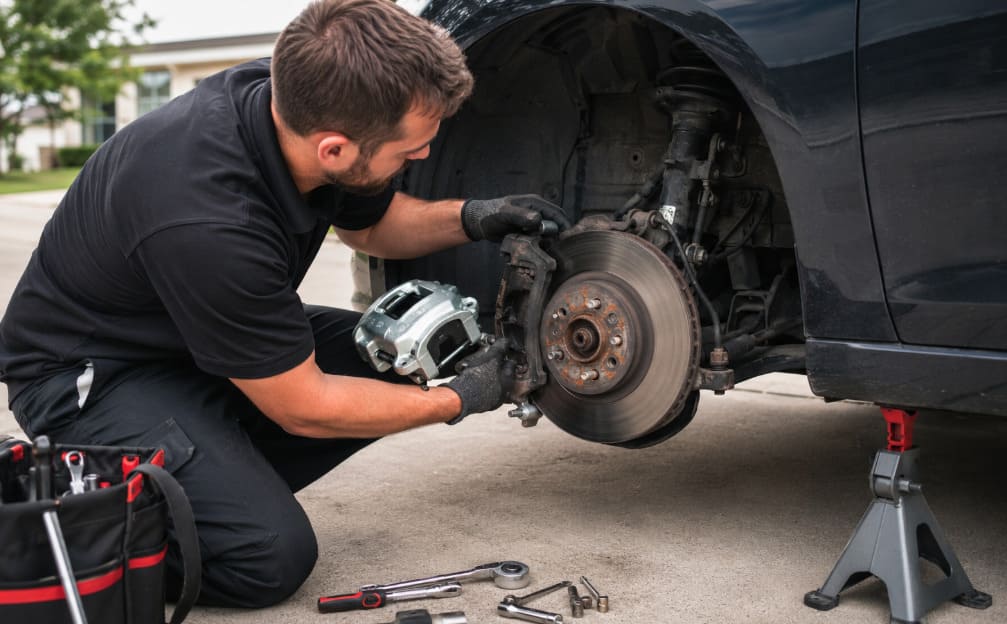
Mobile mechanic replacing a faulty brake caliper on a vehicle safely supported in a residential driveway

When Should a Brake Caliper Be Checked?

Caliper problems can affect braking differently depending on how the component is failing. The exact symptoms help determine where inspection should begin.

Vehicle Pulls While Braking

If the vehicle pulls noticeably to one side when the brakes are applied, braking force may not be equal from side to side. A sticking or improperly operating caliper is one possible cause, but other brake, tire, steering, or suspension conditions can also contribute.

One Wheel Gets Unusually Hot

Excessive heat at one wheel after driving may indicate that a brake is not releasing normally. A sticking caliper may keep the pad in contact with the rotor, but the brake assembly should be inspected before assuming the caliper is responsible.

Burning Smell Near a Wheel

A hot brake can sometimes produce a noticeable burning smell. A caliper that is not releasing normally, a dragging pad, another brake-system condition, or a different wheel-area heat problem may need inspection.

Uneven Brake Pad Wear

Pads on one wheel or one side wearing differently from the others may indicate abnormal brake operation. Caliper movement, hardware, pad condition, rotor condition, and related brake components may all need to be reviewed.

Brake Fluid Is Visible Near the Caliper

Visible brake fluid around a caliper or wheel area requires inspection to determine the source. A caliper may leak, but fluid can also come from another hydraulic brake component.

Caliper Has Already Been Diagnosed

If previous inspection has confirmed a sticking, seized, damaged, or leaking brake caliper, replacement is the next step after the vehicle, axle location, caliper design, and related brake condition are reviewed.

What May Be Checked Before Brake Caliper Replacement?

The exact inspection depends on the vehicle and reported braking symptoms. The goal is to determine whether the caliper assembly is actually responsible before replacement is selected.

  • Caliper condition
  • Visible brake-fluid leakage
  • Brake pad condition
  • Uneven pad wear
  • Rotor condition
  • Caliper movement and operation based on the symptoms and inspection findings
  • Related brake hardware
  • Accessible brake hose and connections
  • Signs of excessive brake heat
  • Differences between sides and related brake components

Why Diagnose Before Replacing the Brake Caliper?

Pulling, grinding, heat, or uneven pad wear describe symptoms, not automatically a failed caliper. Worn pads can create noise, damaged rotors can contribute to vibration, and other hydraulic, wheel, suspension, or brake components can create similar concerns.

A confirmed caliper leak, sticking condition, or seized assembly may support complete caliper replacement, but the source should be verified first. Rear calipers with electronic parking-brake integration may also require vehicle-specific procedures.

If the failed brake component has not yet been identified, see Brake Service. If the symptoms remain unclear or overlap with another system, see Car Diagnostic Service.
How Brake Caliper Replacement Service Works

The service follows the exact braking symptoms and inspection findings before replacement is selected.

Step 1

Describe the Brake Symptoms

Provide the vehicle year, make, model, service location, and whether the vehicle pulls while braking, one wheel gets unusually hot, a burning smell is present, brake fluid is visible, grinding or dragging occurs, or a caliper has already been diagnosed.

Step 2

Review the Caliper and Related Brake Components

The caliper, brake pads, rotor, accessible hydraulic connections, hardware, and other related brake components may be reviewed based on the symptoms and inspection findings.

Step 3

Determine the Next Repair

If the complete caliper assembly is confirmed as the problem, caliper replacement is the next step. If another component is responsible, the request can be directed toward the correct brake service.

Brake Caliper Replacement FAQs

What are common signs of a bad brake caliper?

Possible signs include brake pulling, a wheel becoming unusually hot, uneven pad wear, dragging, visible brake-fluid leakage, or a burning smell near a wheel. Other brake conditions can create similar symptoms.

Does pulling while braking mean the caliper is bad?

Not always. Brake pads, rotors, hydraulic concerns, tires, suspension, or steering conditions can also affect how the vehicle behaves while braking.

Can a sticking brake caliper make a wheel hot?

Yes. A brake that does not release normally can generate excessive heat, although the brake assembly should be inspected to determine the cause.

Can a bad caliper cause uneven brake-pad wear?

Improper caliper operation can contribute to uneven pad wear, but the pads, rotor, hardware, and related brake components should also be inspected.

Can a brake caliper be replaced at the vehicle's location?

Brake caliper replacement can often be completed where the vehicle is parked when the caliper can be accessed and the hydraulic work can be performed there.

Can every brake caliper be replaced on-site?

No. Some vehicles require difficult access, electronic parking-brake procedures, specialized equipment, significant hydraulic work, or other shop-level resources.

Brake Caliper Service Resources

Use these pages to review the broader service catalog, local service coverage, and common questions before booking brake caliper service.

All Mobile Mechanic Services

Browse brake service, diagnostics, suspension, steering, maintenance, and other supported mobile mechanic services.

Service Areas

Review the current Mobile Mechanic Pro service-area directory and supported Hampton Roads city pages.

Mobile Mechanic Near Me

See how mobile mechanic service works at homes, workplaces, apartments, parking areas, and other vehicle locations.

Mobile Mechanic FAQs

Find answers about diagnostics, appointments, vehicle locations, and common on-site repair questions.

Gallery

See examples of mobile mechanic service work and vehicle repair activity.

Contact

Use the contact page for general questions that are not part of a vehicle service request.

Book Brake Caliper Service

Brake pulling, wheel getting unusually hot, or already diagnosed with a sticking or leaking caliper? Provide the vehicle details, service location, which wheel or side appears affected, whether the problem is front or rear, whether brake fluid is visible, whether grinding or dragging is occurring, and whether the caliper has already been diagnosed or purchased.