Clunking or Knocking Over Bumps
A worn ball joint may create a clunk as the suspension moves. Control-arm bushings, sway-bar links, strut mounts, shocks, struts, tie rods, and other suspension hardware can create similar noises.
Clunking over bumps, steering feeling loose, or already told a ball joint is worn?
Ball joints connect parts of the steering and suspension system while allowing the wheel assembly to move as the vehicle steers and travels over uneven roads.
Ball joint replacement is the next step when inspection or previous diagnosis identifies the ball joint as the problem.
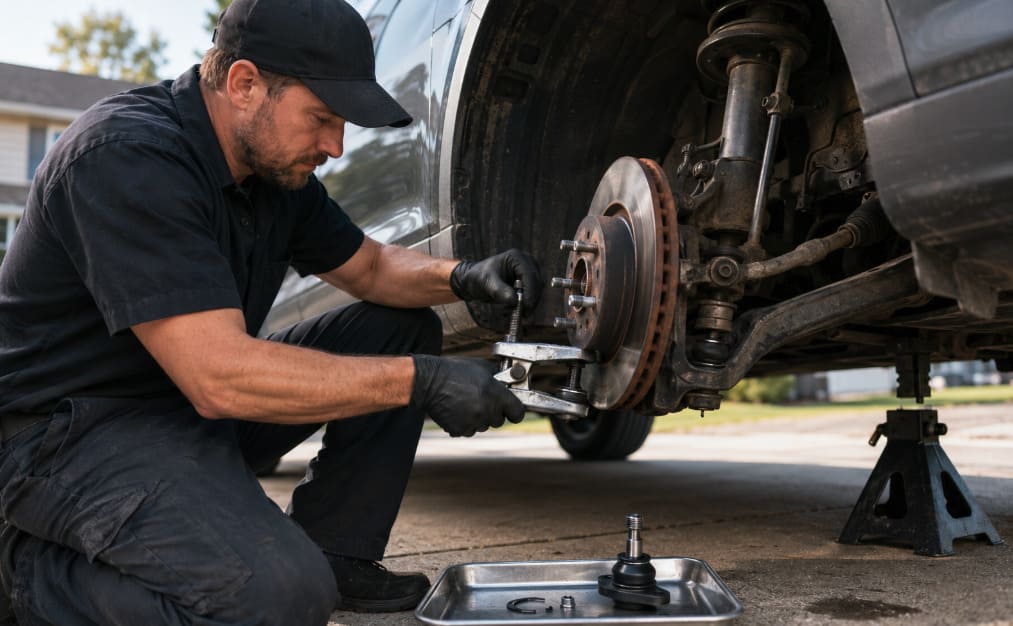
Ball-joint problems can feel similar to several other suspension and steering concerns, so the symptom should be inspected before a specific part is selected for replacement.
A worn ball joint may create a clunk as the suspension moves. Control-arm bushings, sway-bar links, strut mounts, shocks, struts, tie rods, and other suspension hardware can create similar noises.
A worn suspension or steering joint can contribute to looseness or an unsettled steering feel, but tie rods, control arms, wheel bearings, and other steering components can create similar symptoms.
Suspension looseness can affect how a tire contacts the road. Ball joints, control arms, tie rods, tire condition, alignment, and other suspension components may need to be considered.
Popping, clunking, or other noises while turning may involve a ball joint, but CV axles, tie rods, strut mounts, and other components can produce similar sounds.
Unexpected looseness or movement at the wheel may indicate wear in a ball joint, wheel bearing, tie rod, or another suspension component.
If previous inspection has confirmed that a ball joint is worn or damaged, replacement is the next step after reviewing the vehicle design, joint position, access, and repair requirements.
The inspection should follow the reported symptoms and vehicle design. The goal is to determine whether the ball joint is actually responsible before replacement is selected.
Clunking, looseness, or tire wear describes the symptom, not automatically the failed component. A control-arm bushing can clunk, a tie rod can create steering looseness, a wheel bearing can create abnormal movement, and a strut or mount can create suspension noise.
Some ball joints are separately serviceable, while others are integrated into the control-arm assembly. If the ball joint is part of the complete arm, Control Arm Replacement may be the repair path.
If the failed component has not yet been identified, see Suspension Inspection and Repair Service. If clicking occurs mainly while turning, see CV Axle Replacement.
The service follows the reported suspension and steering symptoms and the vehicle-specific ball-joint design before replacement is selected.
Provide the vehicle year, make, model, service location, and whether there is clunking, loose steering, wandering, popping while turning, uneven tire wear, abnormal wheel movement, or a previously diagnosed ball joint.
The ball joint, control arm, mounting area, steering components, wheel-bearing concerns, and other related suspension parts may be reviewed based on the symptoms and inspection findings.
If the ball joint is confirmed as the problem, the vehicle design determines whether the repair is separate ball-joint replacement, complete control-arm replacement, another suspension repair, or a service requiring additional equipment.
Possible signs include clunking over bumps, loose or wandering steering, abnormal suspension movement, uneven tire wear, or other changes in steering and suspension behavior. Other components can create similar symptoms.
No. Control arms, bushings, sway-bar links, strut mounts, tie rods, shocks, and other suspension components can also produce clunking.
A worn ball joint may contribute to looseness, but tie rods, control arms, wheel bearings, and other steering or suspension components can create similar symptoms.
No. Some vehicles use a separately serviceable ball joint, while others integrate the joint into the complete control-arm assembly.
Ball joint replacement can often be completed where the vehicle is parked when the joint can be accessed and serviced there.
No. Some designs require press equipment, significant suspension disassembly, specialized tools, difficult hardware removal, or other shop-level resources.
Use these pages to review the broader service catalog, local service coverage, and common questions before booking ball joint service.
Browse diagnostics, suspension, steering, brakes, maintenance, cooling-system repairs, and other supported mobile mechanic services.
Review the current Mobile Mechanic Pro service-area directory and supported Hampton Roads city pages.
See how mobile mechanic service works at homes, workplaces, apartments, parking areas, and other vehicle locations.
Find answers about diagnostics, appointments, vehicle locations, and common on-site repair questions.
See examples of mobile mechanic service work and vehicle repair activity.
Use the contact page for general questions that are not part of a vehicle service request.
Clunking over bumps, steering feeling loose, or already diagnosed with a worn ball joint? Provide the vehicle details, service location, which wheel or area seems affected, whether the concern appears front or rear and left or right, and whether the ball joint has already been diagnosed or purchased.