Power Steering Inspection and Diagnostics at Your Location

Steering suddenly feels heavy, whines when turning, or just doesn’t feel like it used to?

A change in steering effort can point to a power-steering problem, but the cause depends heavily on the vehicle. Some vehicles use hydraulic power steering, while others use electric steering assist and may not use power-steering fluid at all.

Power steering inspection and diagnostic service can help determine whether the concern involves fluid loss, belt operation, electrical controls, steering-assist components, or another steering-related condition.

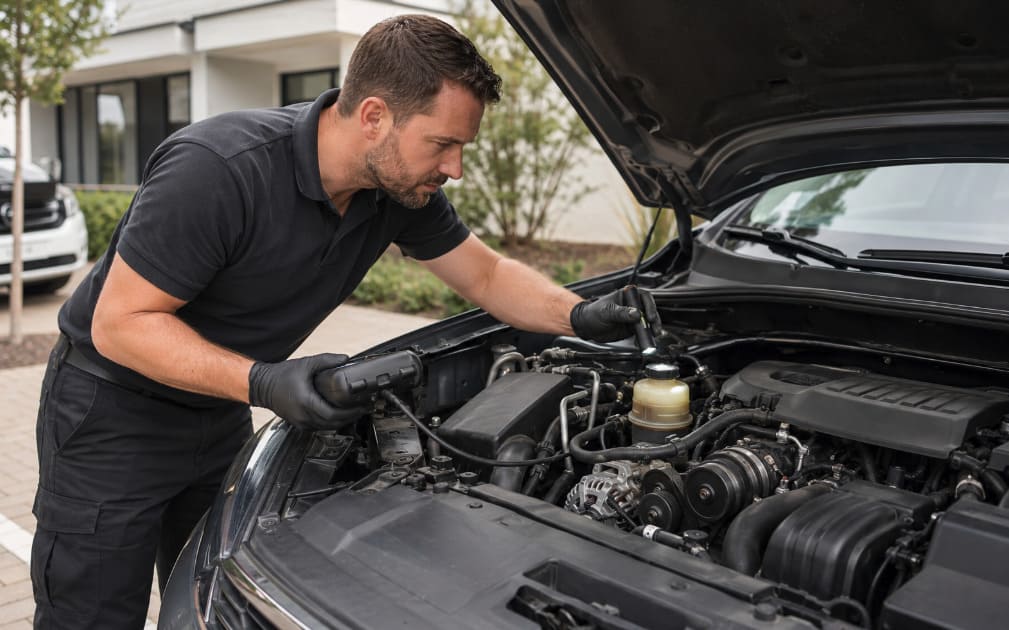
Mobile mechanic inspecting a vehicle’s power steering fluid reservoir and steering system during an on-site diagnostic service

When Should the Power Steering System Be Checked?

Changes in steering effort, unusual noises, warning lights, or visible fluid can indicate that the steering-assist system needs attention.

Steering Feels Stiff or Heavy

If the steering wheel suddenly becomes harder to turn, the power-assist system may not be operating normally. Hydraulic systems may involve fluid, leakage, belt operation, pump concerns, hoses, or connections, while electric systems follow a different diagnostic path.

Whining or Groaning While Turning

A whining or groaning sound that changes as the steering wheel is turned may indicate a power-steering concern on hydraulic systems, but the sound alone does not identify the failed part.

Power Steering Fluid Is Leaking

On hydraulic systems, visible fluid around a hose, connection, reservoir, pump area, or steering component may indicate a leak. The source should be identified before a specific part is replaced.

Steering Assist Works Sometimes but Not Others

Intermittent steering assist can involve hydraulic conditions, belt operation, electrical power, wiring, electronic controls, or steering-assist components depending on the vehicle.

Squealing or Chirping Near the Belt Area

On applicable vehicles, belt wear, tension, alignment, pulleys, or another accessory may create noise while turning. The belt should not be assumed to be the cause without inspection.

Power Steering Warning Light Is On

Electric or electronically controlled steering systems may display a steering-related warning light. Diagnostic codes, battery voltage, wiring, electrical information, or steering-system controls may need to be reviewed.

What May Be Checked During a Power Steering Inspection?

The exact inspection depends on the vehicle's steering-system design and the reported symptoms. The diagnostic process should follow the vehicle design and symptoms rather than beginning with an assumed failed component.

  • Steering effort and reported symptoms
  • Power-steering fluid level on applicable vehicles
  • Visible fluid condition and accessible leaks
  • Hoses and connections
  • Serpentine-belt condition when applicable
  • Belt tension or visible alignment concerns
  • Accessible pulleys and belt-driven components
  • Power-steering pump area on hydraulic systems
  • Steering-related warning lights and diagnostic trouble codes
  • Electrical connections, controls, and other targeted checks on applicable systems

Why Diagnose the Steering Problem Before Replacing Parts?

Hard to turn does not identify the failed part. A hydraulic vehicle with low fluid can feel heavy. A slipping belt may affect steering assist. An electric steering system can lose assist because of an electrical or control-system issue.

Not every vehicle has power-steering fluid. Many vehicles use electric power steering and do not have a conventional hydraulic pump, belt, hoses, or fluid reservoir.

If belt wear has already been identified, see Belt and Hose Service. If the primary complaint is looseness, clunking, unstable handling, or suspension-related steering behavior, see Suspension Inspection and Repair Service.
How Power Steering Service Works

The inspection follows the steering-system design and the exact symptoms before a repair is selected.

Step 1

Describe the Steering Symptoms

Provide the vehicle year, make, model, service location, and whether steering feels heavy, is difficult at low speed, whines or groans, squeals near the belt area, shows visible fluid, displays a steering warning light, or loses assist intermittently.

Step 2

Inspect the Related Steering System

Fluid condition, visible leaks, belt-driven components, accessible steering components, warning lights, electrical information, or other related areas may be evaluated according to the vehicle design.

Step 3

Determine the Next Step

The findings help determine whether the next step is belt-related service, steering-system repair, additional steering diagnosis, suspension inspection, electrical diagnosis, another repair, or service requiring additional equipment.

Power Steering Service FAQs

What are common signs of a power steering problem?

Possible signs include stiff or heavy steering, whining or groaning while turning, visible fluid leakage on hydraulic systems, intermittent steering assist, belt-related noise, or a steering warning light.

Does stiff steering mean the power steering pump needs replacement?

Not necessarily. Heavy steering can involve low fluid, leaks, belt operation, hydraulic components, electric steering controls, or another steering or suspension condition.

Can low power steering fluid cause whining?

Yes, low fluid may contribute to whining on a hydraulic system. If the fluid is low, the reason for the fluid loss should also be identified.

Do all vehicles have power steering fluid?

No. Many vehicles use electric power steering and do not have a conventional hydraulic pump or fluid reservoir.

Can a belt problem affect power steering?

On vehicles with a belt-driven hydraulic power-steering pump, belt wear or slipping may affect steering assist. The belt and related components should be inspected before replacement is selected.

Can every power steering problem be repaired at the vehicle’s location?

No. Some steering concerns require specialized equipment, significant disassembly, alignment-related procedures, manufacturer-specific testing, or shop-level resources.

Power Steering Service Resources

Use these pages to review the broader service catalog, local service coverage, and common questions before booking power steering service.

All Mobile Mechanic Services

Browse steering, suspension, diagnostics, belts and hoses, maintenance, and other supported mobile mechanic services.

Service Areas

Review the current Mobile Mechanic Pro service-area directory and supported Hampton Roads city pages.

Mobile Mechanic Near Me

See how mobile mechanic service works at homes, workplaces, apartments, parking areas, and other vehicle locations.

Mobile Mechanic FAQs

Find answers about diagnostics, appointments, vehicle locations, and common on-site repair questions.

Gallery

See examples of mobile mechanic service work and vehicle repair activity.

Contact

Use the contact page for general questions that are not part of a vehicle service booking.

Book Power Steering Service

Steering suddenly heavy, whining while turning, or showing a steering warning light? Provide the vehicle details, service location, whether steering feels stiff or heavy, whether the problem is constant or mostly at low speed, whether whining or squealing is present, whether fluid is visible, whether a steering warning light is displayed, and whether the problem began suddenly or gradually.