Serpentine Belt Is Cracked or Frayed
Cracking, fraying, glazing, missing material, or other visible damage can indicate that the serpentine belt needs attention. The belt should be evaluated along with alignment and accessible related components.
Hearing a squeal under the hood, seeing cracks in a belt, or noticing coolant where it shouldn’t be?
A worn serpentine belt or deteriorated coolant hose can create noise, leaks, or other problems, but the symptom alone does not always identify which part needs replacement.
Belt and hose service can help inspect visible wear, leaks, connections, and related components before recommending a repair.
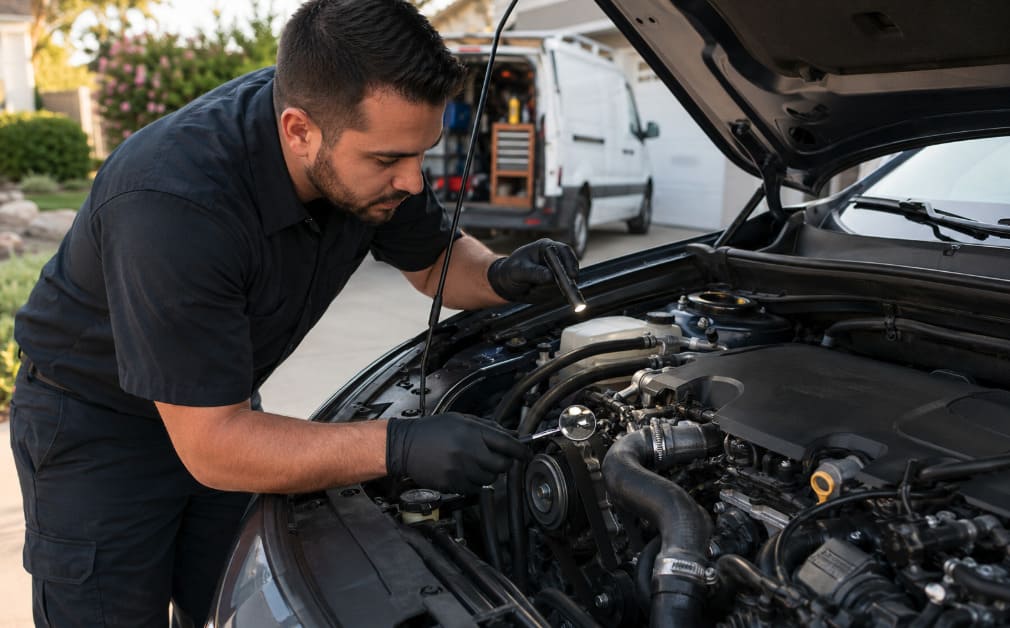
Visible wear, unusual noises, or signs of coolant loss are good reasons to have the related components inspected.
Cracking, fraying, glazing, missing material, or other visible damage can indicate that the serpentine belt needs attention. The belt should be evaluated along with alignment and accessible related components.
A squeal or chirp can involve the serpentine belt, but it may also be related to belt tension, alignment, pulleys, or another belt-driven component.
Coolant around a hose, connection, or clamp may indicate a hose-related leak, but coolant can also travel from another part of the cooling system and collect nearby.
A hose that appears swollen, cracked, soft, brittle, or otherwise deteriorated may need replacement. The hose and accessible connections should be inspected together.
Glazing, severe wear, missing ribs, edge damage, or other visible deterioration may indicate that the belt is approaching the end of its useful service life.
If a serpentine belt or coolant hose has already been inspected and confirmed as needing replacement, replacement is the next step.
The exact inspection depends on the vehicle and reported concern. The goal is to determine whether the belt or hose itself needs replacement or whether another related component is contributing to the problem.
A squealing belt does not always mean the serpentine belt is bad, and coolant near a hose does not always mean the hose is leaking.
Belt noise can involve tension, alignment, pulleys, or another belt-driven component. Coolant can also travel from a radiator, water pump, thermostat housing, connection, or another cooling-system source before reaching the ground.
If the main problem is overheating or unexplained coolant loss, see Radiator and Cooling System Service. If a water-pump concern has already been identified, see Water Pump Service.
The service begins with the visible wear, noise, leak, or other symptom before deciding which component needs attention.
Provide the vehicle year, make, model, service location, and what has been noticed, including squealing, chirping, visible belt cracks, fraying, glazing, coolant leaks, deteriorated hoses, repeated coolant loss, or overheating.
The relevant belt, hose, connections, and accessible related components are inspected based on the reported concern.
The findings help determine whether the next step is serpentine-belt replacement, coolant-hose replacement, cooling-system diagnosis, belt-drive inspection, another repair, or service requiring additional equipment.
Possible signs include cracking, fraying, glazing, missing material, or unusual squealing or chirping. Related belt-drive components may also need inspection.
No. Squealing can involve belt wear, tension, alignment, pulleys, or another belt-driven component. Inspection helps determine the cause.
Coolant-hose replacement can often be completed where the vehicle is parked when the hose can be accessed and serviced there.
Not always. Coolant may come from the hose or connection, but it can also travel from another part of the cooling system. The source should be identified first.
A damaged or slipping belt can affect belt-driven accessories depending on the vehicle. The belt and related accessible components should be inspected when abnormal wear or noise is present.
No. Some vehicles require difficult access, additional disassembly, specialized procedures, or shop-level equipment.
Use these pages to review the broader service catalog, local service coverage, and common questions before booking belt and hose service.
Browse cooling-system, maintenance, diagnostics, belt-driven accessory, and other supported mobile mechanic services.
Review the current Mobile Mechanic Pro service-area directory and supported Hampton Roads city pages.
See how mobile mechanic service works at homes, workplaces, apartments, parking areas, and other vehicle locations.
Find answers about diagnostics, appointments, vehicle locations, and common on-site repair questions.
See examples of mobile mechanic service work and vehicle repair activity.
Use the contact page for general questions that are not part of a vehicle service booking.
Squealing belt, visible cracks, or coolant leaking near a hose? Provide the vehicle details, service location, whether the vehicle currently runs, whether the belt squeals or chirps, whether cracks or fraying are visible, whether coolant is leaking, whether the vehicle is overheating, and whether a belt or hose has already been inspected.