Excessive Vibration at Idle
A worn engine mount may allow more engine vibration to transfer into the body of the vehicle, especially while stopped, idling, or in gear. Rough engine operation or a misfire can create similar vibration.
Vehicle shaking at idle, clunking when shifting, or already told an engine mount is worn?
Engine mounts support the powertrain while helping control movement and vibration. When a mount becomes worn or damaged, the vehicle may develop excessive vibration, movement, or clunking.
Engine mount replacement is the next step when inspection or previous diagnosis identifies a worn or damaged mount as the source of the problem.
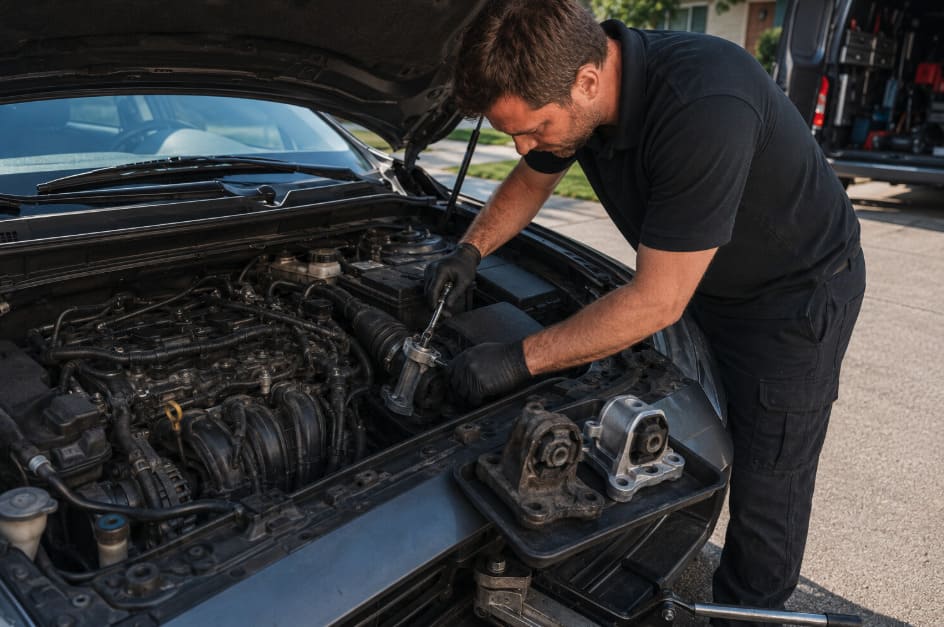
Engine-mount problems can show up differently depending on the vehicle, mount location, and how the component has worn.
A worn engine mount may allow more engine vibration to transfer into the body of the vehicle, especially while stopped, idling, or in gear. Rough engine operation or a misfire can create similar vibration.
A worn mount may allow additional powertrain movement when load changes. Other drivetrain or suspension components can create similar noises, so the symptom should be evaluated before replacement.
Excessive engine movement during changes in load may indicate that one or more mounts are no longer controlling movement normally. Mount condition and surrounding components should be inspected first.
A mount problem may become more noticeable as engine load increases, but CV axles, wheels or tires, drivetrain components, suspension parts, and engine operation can create similar symptoms.
Cracking, separation, deterioration, or other visible damage may support further inspection. Some mount designs can also fail internally without obvious external damage.
If previous inspection has confirmed that an engine mount needs replacement, the next step is reviewing the exact mount location, access, support requirements, and vehicle-specific repair needs.
The exact inspection depends on the vehicle and reported symptoms. The goal is to determine whether an engine mount is actually responsible before replacement is selected.
The vehicle is vibrating describes a symptom, not the failed part. Engine misfires, rough running, CV axles, suspension components, wheel or tire concerns, and other drivetrain conditions can create similar symptoms.
Vehicles may use several mounts in different locations, and they do not automatically need to be replaced as a set. Replacement should follow the condition of the individual mount and the vehicle-specific repair requirements.
If the engine itself is running rough, see Car Diagnostic Service. If vibration occurs mainly during acceleration or clicking occurs while turning, see CV Axle Replacement. If clunking occurs mainly over bumps, see Suspension Inspection and Repair Service.
The service follows the reported vibration, clunking, movement, and engine-operation symptoms before replacement is selected.
Provide the vehicle year, make, model, service location, and whether vibration occurs at idle, while stopped in gear, during acceleration, or with a clunk while shifting. Include whether the engine itself runs smoothly and whether a specific mount has already been diagnosed.
Mount condition, powertrain movement, engine operation, and other accessible related components may be reviewed based on the symptoms and inspection findings. If the vibration appears to come from another system, additional diagnosis may be needed.
If an engine mount is confirmed as the problem, replacement is the next step. If another condition appears responsible, the request can be directed toward the related service.
Possible signs include excessive vibration at idle, increased vibration while stopped in gear, clunking during load changes, or excessive powertrain movement. Other mechanical conditions can create similar symptoms.
Not always. Engine misfires, rough running, ignition problems, and other engine or drivetrain conditions can also create vibration.
A worn mount may allow additional movement when shifting between drive and reverse, which can contribute to a clunk. Other drivetrain components can create similar symptoms.
Not automatically. Replacement should depend on the condition of the individual mounts, vehicle design, and inspection findings.
Engine mount replacement can often be completed where the vehicle is parked when the mount can be accessed and the powertrain can be supported for the repair.
No. Some mounts require extensive component removal, significant engine or drivetrain support, difficult access, specialized tools, or shop-level resources.
Use these pages to review the broader service catalog, local service coverage, and common questions before booking engine mount service.
Browse diagnostics, suspension, drivetrain-related services, maintenance, and other supported mobile mechanic services.
Review the current Mobile Mechanic Pro service-area directory and supported Hampton Roads city pages.
See how mobile mechanic service works at homes, workplaces, apartments, parking areas, and other vehicle locations.
Find answers about diagnostics, appointments, vehicle locations, and common on-site repair questions.
See examples of mobile mechanic service work and vehicle repair activity.
Use the contact page for general questions that are not part of a vehicle service request.
Vehicle shaking at idle, clunking when shifting, or already diagnosed with a worn engine mount? Provide the vehicle details, service location, when the vibration or clunk occurs, whether the engine itself runs smoothly, whether the vibration changes in gear or during acceleration, and whether a specific mount has already been diagnosed or purchased.