Thermostat Replacement at Your Location

Temperature gauge climbing too high or barely moving at all?

A thermostat helps control coolant flow as the engine warms up. When it stops operating correctly, the engine may overheat, take too long to reach normal temperature, or show unusual temperature changes.

Those symptoms do not automatically mean the thermostat has failed. Low coolant, a leak, radiator problems, water-pump concerns, cooling-fan issues, or another cooling-system condition can create similar symptoms.

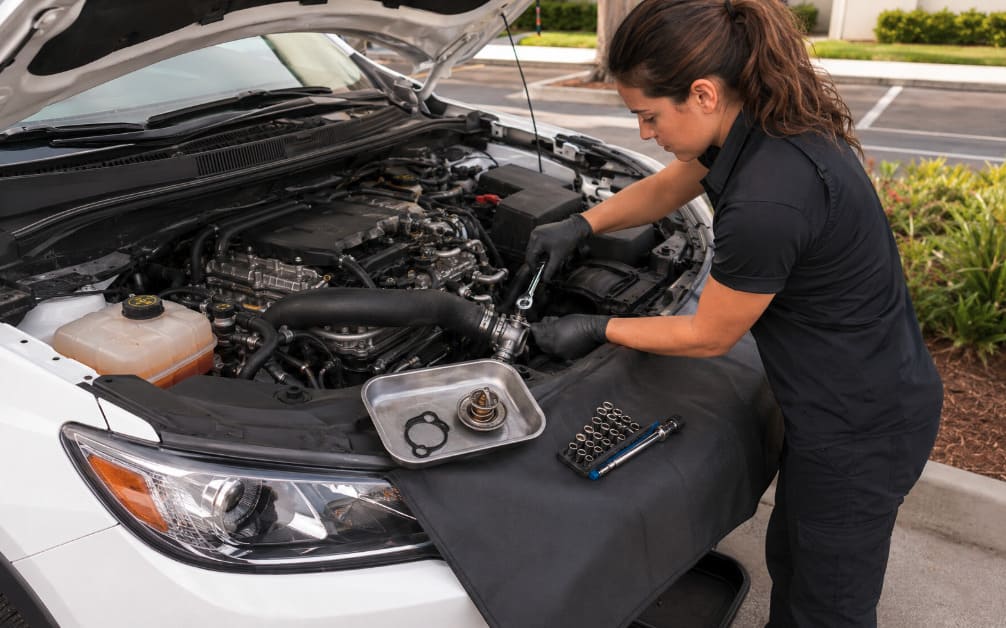
Mobile mechanic replacing a faulty engine thermostat at the customer’s location after diagnosing a cooling-system problem.

When Should the Thermostat Be Checked?

Thermostat problems can affect how quickly the engine warms up and how consistently it maintains operating temperature.

Engine Is Overheating

A thermostat that does not allow normal coolant flow can contribute to overheating. Low coolant, leaks, radiator problems, water-pump concerns, cooling-fan operation, hoses, and other cooling-system conditions may create the same symptom.

Engine Takes Too Long to Warm Up

If the engine remains cooler than expected for an unusually long time, thermostat operation may need to be considered along with the vehicle's actual operating behavior and temperature information.

Temperature Gauge Moves Up and Down

Unusual or inconsistent temperature changes may involve thermostat operation, coolant level, circulation, sensor information, cooling-fan operation, or another system condition.

Heater Does Not Get Very Warm

If the engine does not reach normal temperature, thermostat operation may be one area to consider. Low coolant, airflow issues, heater-system concerns, or other cooling-system problems can produce similar symptoms.

Coolant Is Being Lost

A thermostat-related housing or connection may be one possible area to inspect, but coolant loss can also come from the radiator, hoses, water pump, connections, or another cooling-system component.

Thermostat Has Already Been Diagnosed

If previous testing or inspection has confirmed that the thermostat needs replacement, the next step is reviewing vehicle design, part compatibility, access, and the repair requirements.

What May Be Checked Before Thermostat Replacement?

The exact inspection depends on the vehicle and reported symptoms. The goal is to determine whether the thermostat is actually responsible before replacement is selected.

  • Engine temperature behavior
  • Coolant level
  • Visible coolant leaks
  • Radiator condition
  • Coolant hose condition
  • Thermostat-related housing and connections when accessible
  • Cooling-fan operation when relevant
  • Water-pump or coolant-circulation concerns
  • Temperature-related diagnostic information based on the symptoms and test results
  • Other cooling-system checks based on the symptoms

Why Diagnose Before Replacing the Thermostat?

The engine is running hot describes a symptom, not the failed part. A leaking hose can reduce coolant level. A radiator problem can affect heat removal. A water-pump problem can affect coolant circulation. A cooling-fan concern can contribute to overheating.

A thermostat can also affect an engine that takes unusually long to warm up, but temperature-sensor or other vehicle-specific conditions can create similar indications.

If the source of overheating or coolant loss is unknown, see Radiator and Cooling System Service. For a suspected water-pump problem, see Water Pump Service. For a known hose problem, see Belt and Hose Service. If the cause remains unclear, see Car Diagnostic Service.

How Thermostat Service Works

The service follows the reported temperature and cooling-system symptoms before replacement is selected.

Step 1

Describe the Temperature Symptoms

Provide the vehicle year, make, model, service location, and whether the engine is overheating, taking too long to warm up, showing unusual gauge movement, losing coolant, producing weak cabin heat, or has already had the thermostat diagnosed.

Step 2

Review the Cooling-System Concern

Coolant level, visible leaks, temperature behavior, radiator and hose condition, thermostat-related areas, cooling-fan operation, and other accessible cooling-system components may be reviewed based on the symptoms and inspection findings.

Step 3

Determine the Next Repair

If the thermostat is confirmed as the problem, replacement is the next step. If another component is responsible, the findings help direct the request toward the related service.

Thermostat Replacement FAQs

What are common signs of a thermostat problem?

Possible signs include overheating, unusually slow engine warm-up, inconsistent temperature readings, or changes in cabin heat. These symptoms can also have other causes, so inspection may be needed.

Does overheating mean the thermostat needs replacement?

No. Overheating can involve low coolant, a radiator, water pump, coolant hose, cooling fan, thermostat, or another cooling-system condition.

Can a bad thermostat make the engine run too cool?

A thermostat problem can contribute to an engine that takes too long to reach normal operating temperature or runs cooler than expected.

Can a thermostat cause weak cabin heat?

If the engine is not reaching normal temperature, thermostat operation may contribute to weak heat. Low coolant or other heating and cooling-system concerns can create similar symptoms.

Can a thermostat be replaced at the vehicle's location?

Thermostat replacement can often be completed where the vehicle is parked when the thermostat can be accessed and serviced there.

Can every thermostat replacement be completed on-site?

No. Some vehicles require difficult access, extensive disassembly, specialized procedures, or shop-level resources.

Thermostat Service Resources

Use these pages to review the broader service catalog, local service coverage, and common questions before booking thermostat service.

Service Areas

Review the current Mobile Mechanic Pro service-area directory and supported Hampton Roads city pages.

Mobile Mechanic Near Me

See how mobile mechanic service works at homes, workplaces, apartments, parking areas, and other vehicle locations.

Mobile Mechanic FAQs

Find answers about diagnostics, appointments, vehicle locations, and common on-site repair questions.

Gallery

See examples of mobile mechanic service work and vehicle repair activity.

Contact

Use the contact page for general questions that are not part of a vehicle service request.

Book Thermostat Service

Engine running too hot, taking forever to warm up, or showing unusual temperature changes? Provide the vehicle details, service location, whether the vehicle currently runs, whether it has overheated, whether the temperature gauge fluctuates, whether coolant is being lost, whether cabin heat has changed, and whether the thermostat has already been diagnosed or purchased.