One Click but No Crank
A single click with no engine movement may involve the starter or starter solenoid, but battery condition, electrical connections, voltage loss, wiring, relays, and control circuits can produce a similar symptom.
Turn the key, hear a click, but the engine won’t crank?
A clicking or no-crank condition can point toward the starter, but it can also involve the battery, electrical connections, wiring, relay, or another part of the starting system.
Starter testing and starting-system service can help determine what is preventing the engine from cranking before a starter or other component is replaced.
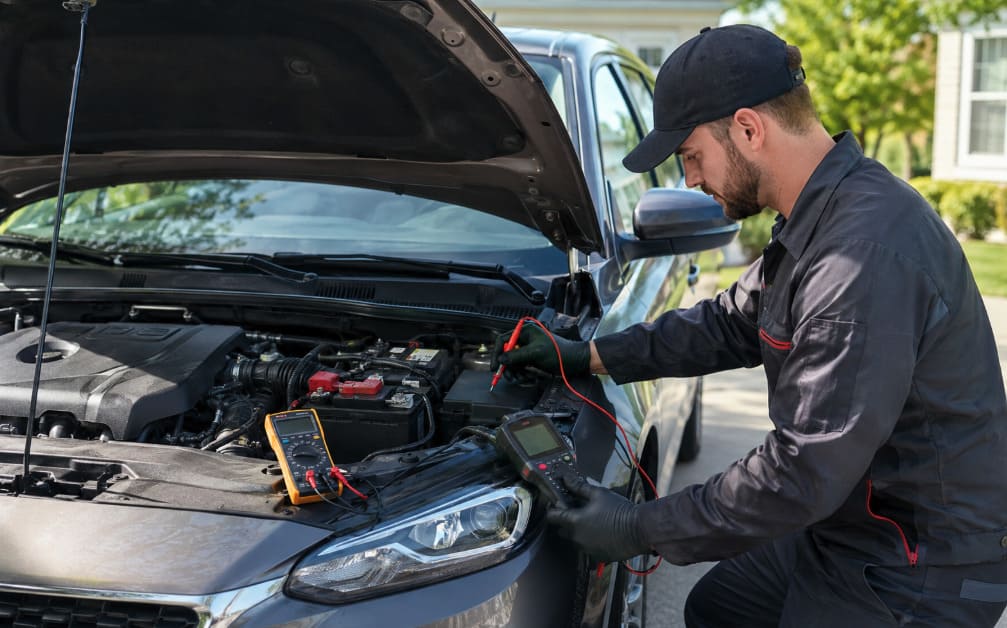
Starter-related symptoms can appear in several different ways. What happens when the key is turned or the start button is pressed helps determine where testing should begin.
A single click with no engine movement may involve the starter or starter solenoid, but battery condition, electrical connections, voltage loss, wiring, relays, and control circuits can produce a similar symptom.
Working lights, radio, and dashboard displays do not prove that the starting system has enough electrical power to operate the starter. Battery condition, cables, terminal connections, the starter circuit, relays, wiring, and the starter motor may need testing.
An intermittent no-crank problem may involve the starter, solenoid, relay, wiring, electrical connections, or another control-circuit condition.
If a start is requested but the starter does not engage, power, ground, control signals, wiring, relays, battery condition, and the starter itself may need to be checked.
Rapid repeated clicking often points toward a different diagnostic path from one solid click. Battery voltage, terminals, cables, and electrical connections may need to be checked first.
Slow cranking may involve a weak or discharged battery, poor battery connections, cable resistance, starter condition, or another starting-system issue.
The exact testing depends on the vehicle and reported starting symptoms. Testing should follow the starting symptom rather than begin with the assumption that the starter is bad.
One click does not necessarily mean the starter is bad. Low battery voltage, poor electrical connections, voltage loss, wiring, relays, and control circuits can create the same general symptom.
Testing helps determine whether the battery can support a start attempt, whether power reaches the starter circuit, whether excessive voltage loss is present, and whether the solenoid and starter motor respond correctly.
If the battery itself has failed testing, see Battery Service. If the starter has already been confirmed faulty, see Starter Replacement. If the engine cranks normally but will not start, see Car Won’t Start. For broader unexplained symptoms, see Car Diagnostic Service.
The service follows the reported starting symptom before recommending a repair.
Provide the vehicle year, make, model, service location, and exactly what happens when trying to start the vehicle, including one click, rapid clicking, no sound, slow cranking, intermittent starting, or whether a jump-start changes the symptom.
Battery condition, electrical connections, starter-circuit power, voltage drop, relays, wiring, control signals, starter solenoid, and starter response may be checked based on the symptoms and test results.
The findings help determine whether the next step is starter replacement, battery service, electrical or connection repair, additional no-start diagnosis, another repair, or service requiring shop-level equipment.
Possible signs include one click with no cranking, an intermittent no-crank condition, or a starter that does not engage. Battery, wiring, connections, relays, and control circuits can create similar symptoms, so testing may be needed.
Not always. One click may involve the starter or solenoid, but battery condition, voltage loss, wiring, electrical connections, or relays can create the same general symptom.
Yes. Lights and accessories require less electrical current than the starter motor. A vehicle may have visible electrical power while still having a battery, connection, starter-circuit, or starter problem.
Yes, unless starter failure has already been confirmed. Battery condition, electrical connections, starter-circuit power, voltage drop, controls, and starter response may need to be checked first.
Yes. Starter or solenoid problems can sometimes appear intermittently, although relays, wiring, connections, and control circuits can create similar behavior.
No. Some starting problems require specialized equipment, manufacturer-specific procedures, extended testing, or shop-level resources.
Use these pages to review the broader service catalog, local service coverage, and common questions before booking starter or starting-system service.
Browse starting-system, battery, charging-system, diagnostics, electrical, and other supported mobile mechanic services.
Review the current Mobile Mechanic Pro service-area directory and supported Hampton Roads city pages.
See how mobile mechanic service works at homes, workplaces, apartments, parking areas, and other vehicle locations.
Find answers about diagnostics, appointments, vehicle locations, and common on-site repair questions.
See examples of mobile mechanic service work and vehicle repair activity.
Use the contact page for general questions that are not part of a vehicle service booking.
Clicking, no crank, or starting only sometimes? Provide the vehicle details, service location, whether the engine cranks, whether there is one click or repeated clicking, whether lights and accessories work, whether a jump-start changes the symptom, and whether the battery or starter has already been tested.