Check Engine Light Is Steady
A steady check engine light means the vehicle has detected and stored a fault. The vehicle may seem normal or show rough idle, hesitation, reduced power, poor acceleration, stalling, or changes in fuel use.
Check engine light on and no clear idea what caused it?
Whether the light appeared suddenly, came on with rough running, or has been glowing for days while the vehicle seems normal, check engine light diagnostics can help determine what the vehicle has detected and what needs to be tested next.
A trouble code is useful, but it is not always a diagnosis. The code, vehicle symptoms, scan data, electrical information, and related testing may need to be considered together before recommending a repair.
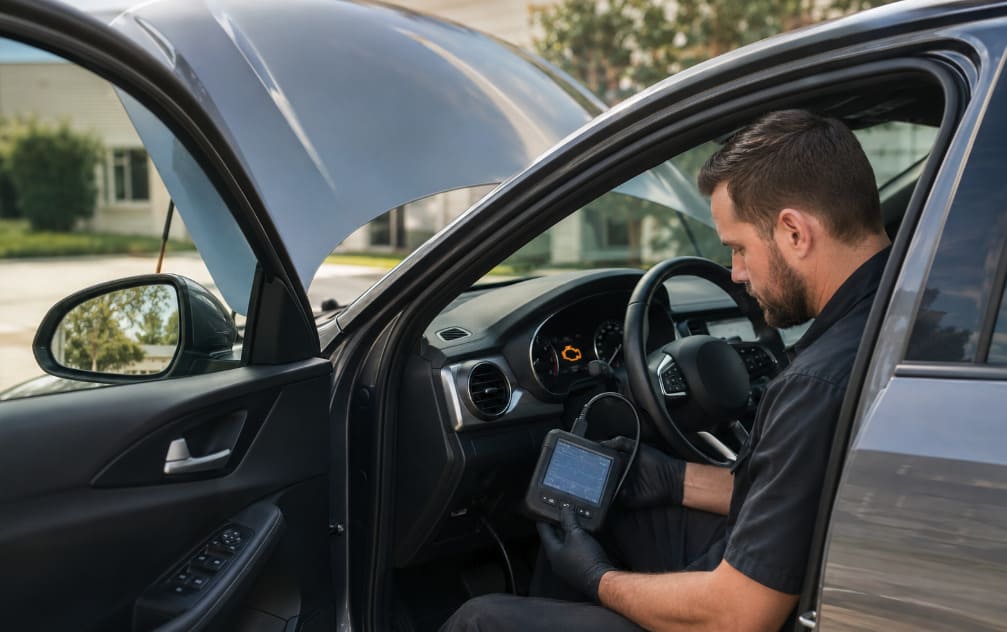
How the light behaves and how the vehicle runs can provide important clues about how quickly the problem should be evaluated.
A steady check engine light means the vehicle has detected and stored a fault. The vehicle may seem normal or show rough idle, hesitation, reduced power, poor acceleration, stalling, or changes in fuel use.
A flashing light can indicate a more urgent fault and may occur with an active misfire. If the vehicle is shaking, running very rough, losing significant power, or producing unusual smells, continued driving should be limited until the problem is evaluated.
A rough idle may involve ignition, fuel delivery, sensors, intake leaks, electrical circuits, engine controls, or another condition. The symptom does not automatically mean spark plugs or ignition coils need replacement.
Shaking can occur when one or more cylinders are not operating normally. Misfire codes may identify an affected area, but additional testing may still be required to determine why the misfire is happening.
Hesitation, weak acceleration, or reduced power may involve fuel delivery, ignition, airflow measurement, sensors, wiring, engine controls, or other drivability conditions.
Some emissions, sensor, electrical, or intermittent conditions may trigger the light before the driver notices an obvious performance problem.
The exact diagnostic process depends on the vehicle, stored trouble codes, and reported symptoms. The goal is to determine why the code was set, not simply read the code and replace the first related part.
A warning light can point to the system without identifying the failed component. A misfire could involve a spark plug, ignition coil, injector, wiring, fuel delivery, or another engine condition.
A sensor-related code could be caused by the sensor itself, wiring, electrical supply, a mechanical condition, or another system affecting the sensor reading. Clearing the light before diagnosis may also erase useful information without fixing the cause.
If the vehicle will not start and the cause is unknown, see Car Won’t Start. If the symptoms are broader than a check engine light, see Car Diagnostic Service.
The code guides the investigation, while the symptoms and test results help determine the correct next step.
Provide the vehicle year, make, model, service location, whether the light is steady or flashing, and any rough running, shaking, hesitation, stalling, loss of power, unusual smells, or unusual noises.
Diagnostic trouble codes and stored information are reviewed, followed by targeted checks such as live data, freeze-frame information, electrical testing, ignition checks, fuel-related testing, wiring inspection, or sensor evaluation based on the symptoms and test results.
The findings help determine whether the next step is a repair, ignition-related service, electrical repair, fuel-delivery service, sensor or circuit testing, additional diagnostics, or service requiring shop-level equipment.
The check engine light means the vehicle computer has detected a fault or operating condition outside its expected range. Diagnostic trouble codes and additional testing may be needed to determine the cause.
A flashing check engine light can indicate a more urgent fault, commonly an active misfire. If the vehicle is also shaking, running very rough, or losing significant power, continued driving should be limited until the problem is evaluated.
Many check engine light concerns can be evaluated where the vehicle is parked. Some faults require specialized equipment or shop-level testing.
Not always. A trouble code identifies a detected condition or circuit. Wiring, connections, sensors, related systems, or mechanical conditions may still need testing.
Some emissions, electrical, sensor, or intermittent faults may be detected before the driver notices a performance problem.
Usually not when the cause is unknown. Clearing the codes may erase useful diagnostic information without correcting the underlying fault.
Use these pages to review the broader service catalog, local service coverage, and common questions before booking check engine light diagnostics.
Browse diagnostics, no-start, fuel-system, electrical, maintenance, and other supported mobile mechanic services.
Review the current Mobile Mechanic Pro service-area directory and supported Hampton Roads city pages.
See how mobile mechanic service works at homes, workplaces, apartments, parking areas, and other vehicle locations.
Find answers about diagnostics, appointments, vehicle locations, and common on-site repair questions.
See examples of mobile mechanic service work and vehicle repair activity.
Use the contact page for general questions that are not part of a vehicle service booking.
Check engine light on, flashing, or appearing with rough running or loss of power? Provide the vehicle details, service location, whether the light is steady or flashing, whether the vehicle starts and drives normally, and a clear description of any other symptoms.