
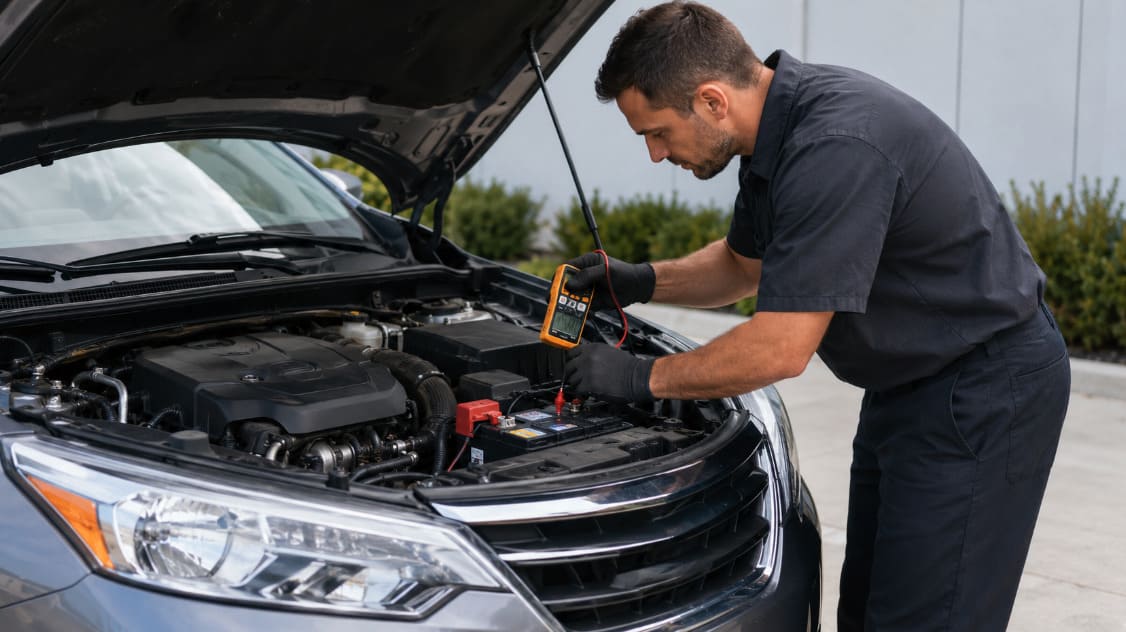
Signs of a bad alternator can include a battery or charging warning light, repeated battery discharge, electrical problems while the engine is running, or lighting and accessories that begin behaving unusually. These symptoms can make the charging system worth testing, but they do not prove the alternator itself has failed.
The alternator works together with the battery and the rest of the charging system. A weak battery, poor electrical connection, wiring problem, or another electrical condition can sometimes create similar symptoms.
This guide explains seven common signs of a bad alternator, how charging problems can resemble battery trouble, and when testing may be more useful than replacing a part based on symptoms alone.
7 Signs of a Bad Alternator to Watch For
The most useful signs of a bad alternator often appear after the engine has started because the charging system becomes especially important while the vehicle is running.
Seven clues worth noticing include:
- A battery or charging-system warning light
- A battery that repeatedly loses charge
- Electrical problems while the engine is running
- Lights that dim, brighten, or behave unusually
- A vehicle that starts with additional battery power but develops problems again
- Electrical accessories that work inconsistently
- Engine-running problems that appear alongside loss of electrical power
Several signs of a bad alternator appearing together can make charging-system testing more useful, but each symptom can have another explanation.
What Does the Alternator Do?
The alternator helps provide electrical power while the engine is running and helps restore charge to the battery after starting.
The battery supplies the initial electrical power needed for the start attempt. Once the engine is running, the charging system helps support vehicle electrical loads and replenish battery charge.
This difference is important when interpreting signs of a bad alternator. Battery and starter problems often become most noticeable during the start attempt, while charging-system problems may become more apparent after the engine has started or after previous driving.
Does a Battery Warning Light Mean the Alternator Is Bad?
No. A battery-shaped or charging-system warning light does not prove that the alternator has failed.
The warning indicates that the vehicle has detected a charging-system condition that deserves attention. Depending on the vehicle, the cause could involve the alternator, electrical connections, wiring, charging-system controls, or another related condition.
A warning light is therefore one of the more noticeable signs of a bad alternator, but it should be treated as a reason for testing rather than confirmation that replacement is needed.
Can a Bad Alternator Cause the Battery to Keep Dying?
Yes. A charging-system problem can leave the battery with less stored energy than expected, but repeated battery discharge does not prove that the alternator is responsible.
If the battery is not being adequately recharged while the engine is running, the vehicle may eventually be left with too little battery power for the next start attempt.
Repeated battery discharge can therefore appear among the signs of a bad alternator, but other possibilities include battery condition, poor connections, an electrical draw while parked, or another charging-system problem.
For battery-specific clues, see signs a car battery needs replacing.
Can a Bad Alternator Look Like a Bad Battery?
Yes. A charging problem can make a battery appear weak because the battery may not be receiving enough charge during normal vehicle operation.
The vehicle may then show symptoms such as slow cranking, repeated jump starts, or a battery that seems to lose power frequently.
Those symptoms can overlap with signs of a bad alternator, which is why battery condition and charging-system performance sometimes need to be evaluated together.
For a broader comparison, see the battery vs. starter vs. alternator guide.
What Electrical Problems Can Point Toward the Charging System?
Electrical behavior while the engine is running can provide useful context when looking for signs of a bad alternator.
Possible clues can include:
- Lights that become unusually dim or bright
- Electrical accessories that begin operating inconsistently
- Warning lights that appear while driving
- A battery that repeatedly becomes discharged
- Electrical symptoms that appear after the vehicle starts normally
These symptoms do not identify one failed component. Electrical connections, wiring, battery condition, and other vehicle systems can also affect electrical behavior.
Can Headlights Dim Because of an Alternator Problem?
They can. Headlights that dim, brighten, or fluctuate while the engine is running can make charging-system performance worth checking.
Lighting behavior alone is not enough to diagnose the alternator because voltage changes, electrical loads, connections, battery condition, and vehicle-specific controls can also influence light output.
When unusual lighting occurs alongside other signs of a bad alternator, the combination can provide a stronger reason to evaluate charging-system performance.
Can a Bad Alternator Cause Starting Problems?
Yes, but usually indirectly. The alternator does not perform the actual engine-cranking function during a start attempt.
The battery supplies the electrical power used by the starter. However, if the charging system did not adequately restore battery charge during previous driving, the battery may have too little stored energy for the next start.
This can create clicking, slow cranking, or a no-start condition that initially looks like a battery problem.
Starting trouble can therefore occur alongside signs of a bad alternator, even though the immediate start attempt depends primarily on battery power and the starting circuit.
What If the Car Starts With a Jump but the Problem Comes Back?
A vehicle that starts after receiving additional battery power but later develops the same problem again may need more than another jump start.
A successful jump can show that additional electrical power changed the starting behavior, but it does not prove that the battery is bad or that the alternator is good.
When repeated battery discharge occurs together with other signs of a bad alternator, charging-system testing can help determine whether the battery is being adequately recharged.
If starting symptoms are the main concern, the battery vs. starter vs. alternator comparison provides additional context.
How Are Alternator Symptoms Different From Starter Symptoms?
Alternator and starter problems usually become most noticeable at different stages of vehicle operation, although some symptoms overlap.
| Symptom | Battery or Connections May Be Involved | Starter May Be Involved | Alternator or Charging System May Be Involved |
|---|---|---|---|
| Rapid clicking | Often worth checking | Possible | Usually indirect |
| One solid click | Possible | Often worth checking | Less typical |
| Slow cranking | Often worth checking | Possible | Possible indirectly if battery charge is low |
| Battery repeatedly loses charge | Possible | Less typical | Worth checking |
| Electrical problems while engine is running | Possible | Less typical | Worth checking |
| Battery or charging warning light | Possible | Less typical | Charging system deserves attention |
These patterns help organize the possibilities but do not provide a definite diagnosis.
For starter-specific symptoms, see bad starter symptoms.
Can the Alternator Be Bad If the Car Still Starts?
Yes. A vehicle can still start while a charging-system problem is developing if the battery has enough stored power for the start attempt.
The more useful clues may appear after the engine begins running or over repeated drive-and-start cycles.
For example, the vehicle may start normally at first but later develop electrical symptoms or repeated battery discharge.
This is why signs of a bad alternator should not be limited to whether the engine starts successfully on one attempt.
Can Loose Wiring Look Like an Alternator Problem?
Yes. Electrical connections and wiring are part of the charging system, and a connection problem can sometimes create symptoms that resemble alternator failure.
For general consumer guidance on diagnosing common vehicle problems before replacement, see the Federal Trade Commission’s Auto Repair Basics guidance.
Testing connections and charging-system output can help separate wiring or connection problems from an alternator that is not operating as expected.
Should the Alternator Be Replaced Based on Signs of a Bad Alternator Alone?
No. Signs of a bad alternator should lead to testing rather than automatic replacement.
Battery discharge, warning lights, unusual electrical behavior, and lighting changes can overlap with:
- Battery condition
- Loose or poor electrical connections
- Charging-system wiring
- Electrical loads
- Vehicle-specific charging controls
- Other electrical problems
Even when several signs of a bad alternator occur together, confirming charging-system performance before replacement can help avoid replacing the wrong component.
For additional information about charging-system service, review the alternator service.
When Might Alternator Replacement Be Needed?
Alternator replacement may be appropriate when testing identifies the alternator as the failed component.
The presence of a battery warning light, repeated discharge, or unusual electrical behavior does not by itself establish that replacement is necessary.
If testing confirms the alternator is responsible for the charging-system problem, the alternator replacement service provides information about that repair path.
What Should Drivers Notice Before Requesting Diagnosis?
Drivers do not need to determine which component has failed before requesting testing.
When signs of a bad alternator are suspected, useful observations include:
- Whether a battery or charging warning light appeared
- Whether the battery repeatedly loses charge
- Whether electrical symptoms occur while the engine is running
- Whether headlights or interior lights change brightness
- Whether accessories begin operating inconsistently
- Whether the vehicle recently needed additional battery power to start
- Whether the problem returns after the vehicle starts
- Whether starting symptoms occur after previous driving
These details can help separate battery, starter, charging-system, and broader electrical possibilities.
If there is smoke, a strong burning odor, visible electrical damage, unusual heat, or another obvious electrical safety concern, continued operation or repeated start attempts may not be appropriate until the condition is evaluated.
When Do Signs of a Bad Alternator Need Diagnosis?
Signs of a bad alternator may warrant diagnosis when charging-related symptoms keep returning, a battery repeatedly loses charge, or several possible electrical causes fit the same behavior.
Testing may be useful when:
- A battery or charging warning light appears
- The battery repeatedly becomes discharged
- Electrical problems occur while the engine is running
- Lights change brightness unexpectedly
- The vehicle repeatedly needs additional battery power
- Battery versus alternator symptoms are unclear
- Electrical connections or charging-system performance need to be distinguished
For Hampton Roads drivers, the vehicle diagnostic service provides information about a possible next step when the cause has not been identified.
When the concern is specifically related to the charging system, review the alternator service.
Frequently Asked Questions About Signs of a Bad Alternator
What are the most common signs of a bad alternator?
Common signs of a bad alternator can include a charging warning light, repeated battery discharge, electrical problems while the engine is running, changing light brightness, or accessories that operate inconsistently. These symptoms can have other causes, so testing may still be needed.
Can a bad alternator drain the battery?
A charging-system problem can leave the battery without enough charge over time. A battery that repeatedly becomes discharged may therefore make charging-system testing worthwhile, but battery condition and electrical connections should also be considered.
Can a bad alternator cause a car not to start?
Yes, indirectly. If the charging system does not adequately restore battery charge during previous driving, the battery may eventually have too little stored power for the next start attempt.
Can the alternator be bad if the car still starts?
Yes. A vehicle may still start if the battery contains enough stored energy. Charging-system symptoms may become more noticeable after the engine starts or after repeated driving and starting cycles.
How can battery and alternator problems be distinguished?
Battery problems often become noticeable during starting, while charging-system problems may become more apparent while the engine is running or when the battery repeatedly loses charge. Testing battery condition and charging-system output is more reliable than identifying the cause from one symptom.